

Abstract
Background: Major depressive disorder (MDD) is a prevalent psychological disorder. Numerous studies have indicated a correlation between low vitamin D levels and depressive symptoms. However, information concerning vitamin D levels in patients with major depressive disorder is limited, especially in underdeveloped countries.
Methods: This cross-sectional study was conducted in the Department of Biochemistry in collaboration with the Department of Psychiatry at Sylhet MAG Osmani Medical College Hospital (SOMCH), Sylhet. The study population comprised fifty patients diagnosed with major depressive disorder (MDD) in the outpatient department of Psychiatry at Sylhet MAG Osmani Medical College Hospital during the study period. The serum content of 25-hydroxyvitamin D was evaluated in patients with Major Depressive Disorder (MDD).
Results: In ≤ 30 years group, 25.9% had deficiency, 22.2% had insufficiency and 51.9% had normal Serum 25 (OH) vitamin D level whereas in >30 years group, 4.3% had deficiency, 39.2% had insufficiency and 56.5% had normal Serum 25 (OH) vitamin D level (p=0.080). Mean level of Serum 25 (OH) vitamin D in
≤30 years group and >30 years group had significant difference (p=0.01). In male, 31.2% had deficiency, 18.8% had insufficiency. Whereas in female group, 8.8% had deficiency, 35.3% had insufficiency. Mean level of Serum 25 (OH) vitamin D in male group and female group was 30.67±11.48 ng/ml and 35.38±12.41 respectively (p=0.206).
Conclusion: The vitamin D level in patients with major depressive disorder vary by age, but not by gender.
Keywords: MDD, vitamin D, age group
Introduction
Major depressive disorder (MDD) is a prevalent and debilitating psychiatric disorder impacting millions globally.1 It is marked by a chronic low mood, diminished interest, impaired focus, sleep disruptions, and decreased energy levels.2 Depression profoundly impacts quality of life and correlates with heightened risk of chronic medical conditions, social impairment, and early mortality.3 Despite progress in identifying its neurological foundation, the precise etiology of major depressive disorders continues to be complex and multifaceted, encompassing interactions among genetic, psychological, and environmental factors.4
In recent years, there has been increasing emphasis on the influence of nutritional factors on mental health, especially vitamin D.5 Vitamin D is a fat-soluble vitamin that acts as a neurosteroid hormone, crucial for calcium and bone metabolism as well as several brain processes. Vitamin D receptors are extensively located in many brain regions associated with mood regulation, such as the hippocampus, prefrontal cortex, and limbic system.6 Experimental studies indicate that vitamin D affects neurotransmitter production, neuroprotection, neuroimmunomodulation, and inflammatory processes, all of which are intricately linked to the pathophysiology of depression.7
Vitamin D deficiency is now acknowledged as a worldwide public health issue. Despite being a tropical nation with enough sunlight, numerous studies indicate a significant prevalence of vitamin D deficiency among the general population in Bangladesh.8 Alterations in lifestyle, indoor employment, traditions, and insufficient food consumption contribute to diminished vitamin D levels.9 Recent evidence indicates that patients with major depressive disorders tend to exhibit reduced serum vitamin D levels in comparison to healthy persons.10 Even so, results from several studies have been inconsistent, and the data from Bangladesh are limited.
Evaluating vitamin D levels in patients with major depressive disorder (MDD) is crucial for recognizing its possible correlation with depression and for informing preventive and treatment approaches. This study aimed to assess vitamin D levels in patients with major depressive disorder and to provide baseline data that could enhance mental health treatment and overall well-being.
Methods:
This was a cross-sectional observational study and was carried out in the Department of Biochemistry in conjunction with the Department of Psychiatry at Sylhet MAG Osmani Medical College Hospital (SOMCH), Sylhet. The duration of the study was 1 year, from July 2021 to June 2022. The study population comprised patients diagnosed with major depressive disorder (MDD) in the outpatient department of Psychiatry at Sylhet MAG Osmani Medical College Hospital during the study period. MDD was diagnosed and validated by a consultant psychiatrist using DSM-5 criteria for MDD.11 Approximately 50 patients with Major Depressive Disorder were chosen using convenience sampling. Informed permission in writing was acquired from each participant. Following an extensive interview and physical examination, venous blood samples were taken from each participant, and serum 25(OH) vitamin D concentrations were measured using an Enzyme-Linked Immunosorbent Assay (ELISA) Kit with a Plate Reader (Italy). Serum 25-hydroxyvitamin D Vitamin D deficiency is defined as a level <20 ng/ml, insufficiency as 20-29 ng/ml, and adequate level as >30 ng/ml.12 Relevant information was documented in a preformatted data collection sheet. Data entry and analysis were conducted with SPSS for Windows version
25.0. A ‘p’ value of less than 0.05 was deemed statistically significant. Tables and figures were used for data presentation.
Results:
In this study, the mean age of the patients were 34.96±15.38 years. Majority of the patients were ≤30 years of age (54%) (Table 1). Among the patients, 16 were male (32%) and 34 were female (68%) (Figure 1). In ≤ 30 years group, 25.9% had deficiency, 22.2% had insufficiency and 51.9% had normal Serum 25 (OH) vitamin D level whereas in >30 years group, 4.3% had deficiency, 39.2% had insufficiency and 56.5% had normal Serum 25 (OH) vitamin D level (p=0.080). Mean level of Serum 25 (OH) vitamin D in ≤30 years group and >30 years group was 23.26±3.89 ng/ml and 48.70±12.10 ng/ml respectively (p=0.01). (Table 2). In male, 31.2% had deficiency, 18.8% had insufficiency and 50% had normal Serum 25 (OH) vitamin D level whereas in female, 8.8% had deficiency, 35.3% had insufficiency and 55.9% had normal Serum 25 (OH) vitamin D level (p=0.142). Mean level of Serum 25 (OH) vitamin D in male and female was 30.67±11.48 ng/ml and 35.38±12.41 respectively (p=0.206). No significant difference found between gender and serum 25 (OH) vitamin D level (p=0.206) (Table 3).
Table 1: Distribution of the study participants according to age (n=100)
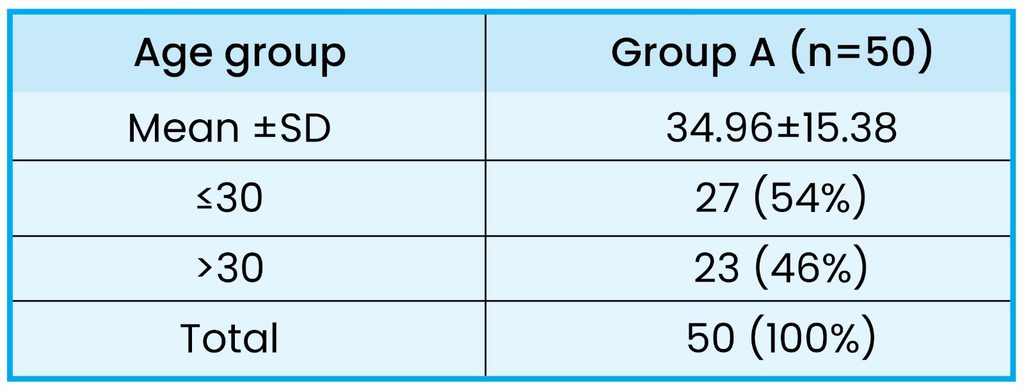
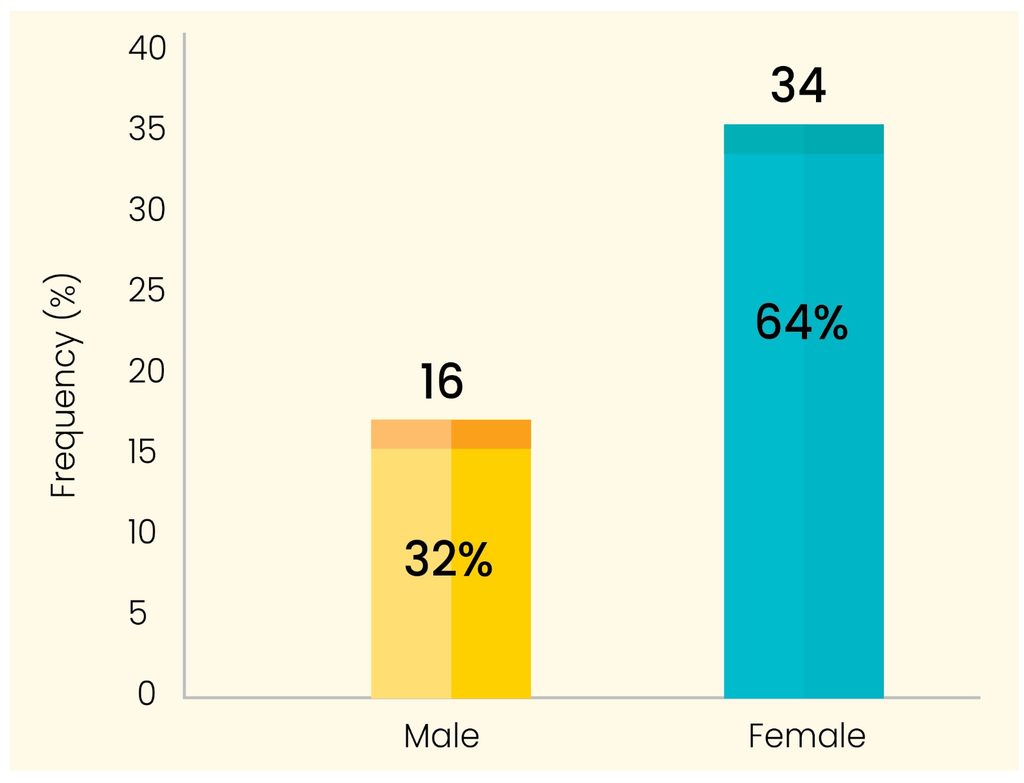
Figure 1: Gender distribution of the patients (N=50)
Results were present in frequency (%). N= Total number of the patients.
Table 2: Serum 25 (OH) vitamin D status among the patients with MDD according to age (N=50)
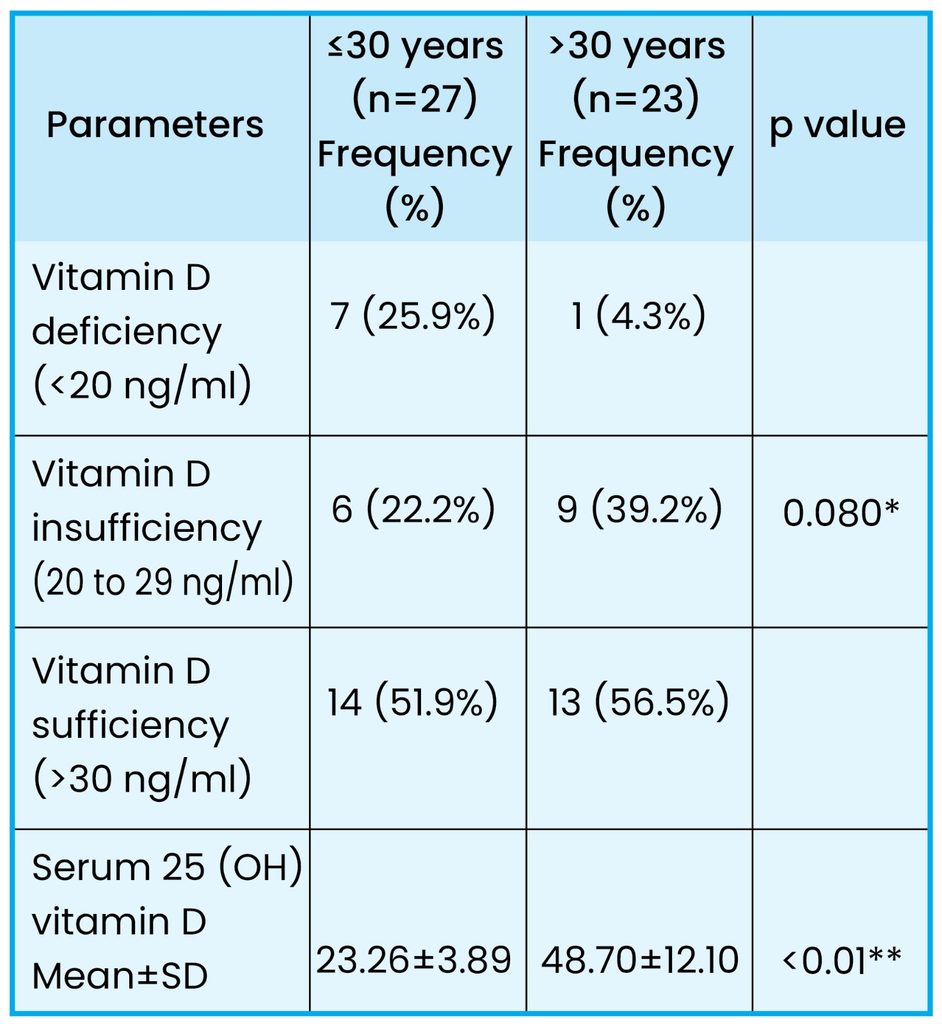
Statistical analysis was done by *Fisher Exact test and **Independent sample t test. Results were present in Mean ±SD and frequency (%). N= Total number of the patients.
Table 3: Gender wise Serum 25 (OH) vitamin D status among the patients with MDD (N=50).
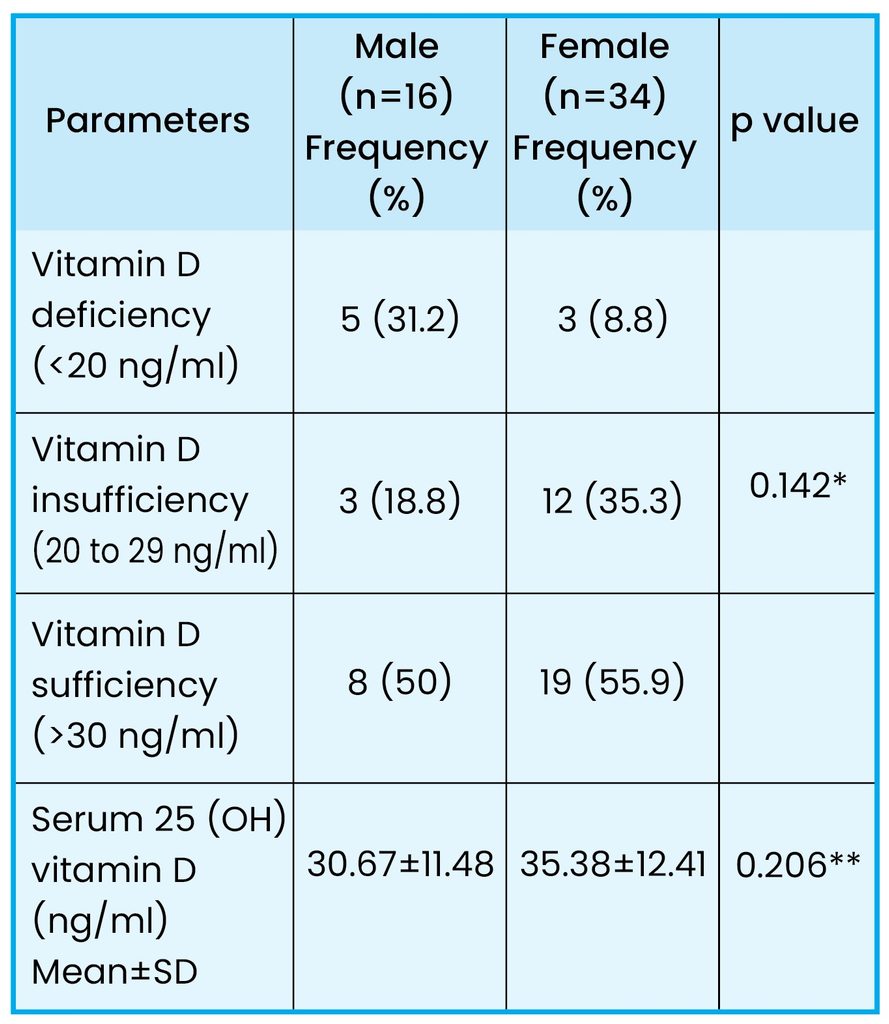
Statistical analysis was done by *Fisher Exact test and **Independent sample t test. Results were present in Mean ±SD and frequency (%). N= Total number of the patients.
Discussion:
Major depressive disorder (MDD) is a prevalent mental disorder that adversely impacts individuals’ health-related quality of life and correlates with diminished productivity. Depression may onset early in life and, if untreated, can elevate the risk of substance addiction, chronic conditions such as cardiovascular disease, and early mortality. The etiology of depressive disorder is believed to result from a confluence of biological, environmental, and psychological variables.13,14
The assessment of vitamin D status across age groups revealed substantial differences in the current study. Vitamin D deficiencies was more prevalent among persons aged ≤30 years (25.9%) compared to those aged >30 years (4.3%). Vitamin D insufficiency was more prevalent in the older age group (39.2%) than in the younger group (22.2%), although vitamin D sufficiency was marginally higher in participants over 30 years (56.5%) compared to those 30 years or younger (51.9%). However, these category differences were not statistically significant (p=0.080). The mean serum 25(OH) vitamin D concentration was markedly lower in the ≤30 years group (23.26±3.89 ng/ml) than in the >30 years group (48.70±12.10 ng/ml), the difference that was statistically significant (p<0.01).
The comparison of serum 25(OH) vitamin D levels between male and female patients with major depressive disorder revealed slight variance, although no statistically significant difference was observed. Vitamin D deficiencies was more prevalent in males (31.2%) than in females (8.8%). Conversely, the prevalence of vitamin D insufficiency was greater in females (35.3%) compared to males (18.8%). Vitamin D sufficiency was somewhat higher in females (55.9%) compared to males (50%). But these differences lacked statistical significance (p=0.142). The mean serum 25(OH) vitamin D concentration was lower in males (30.67±11.48 ng/ml) than in females (35.38±12.41 ng/ml), however this difference was not statistically significant (p=0.206).
In the 2015 study conducted by Alamdari et al., it was observed that low serum 25(OH) D levels were present in MDD patients, and more than seventy-six percent of the patients (77.6%) were vitamin D deficient.13 Additionally, Ceolin et al. demonstrated a statistically significant correlation between depressive symptoms and serum 25(OH) D deficiency.12 Kohnke, Herrmann, and Berger conducted a cross-sectional study in Germany that included 1169 outpatients with MDD. In total, 45.0% of the participants exhibited adequate 25(OH) D levels
(≥20 ng/ml), while 24.9% had a deficiency (<12 ng/ml). The lowest levels were observed in patients with atypical depression, at 14.6 ng/ml. The severity of symptoms was inversely correlated with 25(OH) D.15
In a study conducted by Okasha et al., it came out that the serum vitamin D levels of men with MDD were higher than those of female. However, age was not found to be a significant factor in the association between a low serum vitamin D level and MDD. The study also noted that the uniform covering of the majority of female bodies may interfere with their exposure to sunlight, which is essential for producing vitamin D.16 Rhee, Lee, and Ahn found that serum vitamin D levels are inversely correlated with depressive symptoms, particularly in the cognitive/affective domain, however, this was only observed in men.17 Compared to the male patients, the female patients exhibited a statistically significant decrease in Vitamin D levels, according to another study. The results of the study may be influenced by a variety of cultural and religious factors.18 Rhee, Lee, and Ahn found that the serum 25 (OH) D concentration was decreased in men with at least moderate depressive symptoms than in those with absent or mild depressive symptoms (3.57 ± 0.10 vs 4.01 ± 0.04). However, there was no statistically significant difference between the two groups in women (3.81 ± 0.13 vs 3.79 ± 0.04).17 Omnia et al. found that the female patients experienced a statistically significant decline in vitamin D levels in comparison to the male patients.18
Conclusion
This study concludes that vitamin D level in patients with major depressive disorder varies by age but not by gender. Patients aged 30 years or younger had a considerably elevated prevalence of vitamin D deficiency and a significantly lower mean serum 25 (OH) vitamin D level in comparison to patients older than 30 years. No significant difference in vitamin D levels was noted between male and female patients.
Author of This Article
Dr. Gauri Rani Deb Nath
MBBS (Dhaka), BCS (Health), M.Phil., Sylhet MAG Osmani Medical College
Reg No-A-45426
References
- Marx W, Penninx BW, Solmi M, Furukawa TA, Firth J, Carvalho AF, Berk M. Major depressive disorder. Nature Reviews Disease Primers. 2023;9(1):44.
- Fekadu N, Shibeshi W, Engidawork E. Major depressive disorder: pathophysiology and clinical management. J Depress Anxiety. 2017;6(1):255-7.
- Gold SM, Köhler-Forsberg O, Moss-Morris R, Mehnert A, Miranda JJ, Bullinger M, Steptoe A, Whooley MA, Otte C. Comorbid depression in medical diseases. Nature reviews Disease primers. 2020;6(1):69.
- Mill J, Petronis A. Molecular studies of major depressive disorder: the epigenetic perspective. Molecular psychiatry. 2007;12(9):799-814.
- Głąbska D, Kołota A, Lachowicz K, Skolmowska D, Stachoń M, Guzek D. The influence of vitamin D intake and status on mental health in children: a systematic review. Nutrients. 2021;13(3):952.
- Eyles DW. Vitamin D: brain and behavior. Journal of Bone and Mineral Research Plus. 2021;5(1):e10419.
- Menéndez SG, Manucha W. Vitamin D as a modulator of neuroinflammation: implications for brain health. Current Pharmaceutical Design. 2024;30(5):323-32.
- Islam MZ, Bhuiyan NH, Akhtaruzzaman M, Allardt CL, Fogelholm M. Vitamin D deficiency in Bangladesh: A review of prevalence, causes and recommendations for mitigation. Asia Pacific journal of clinical nutrition. 2022;31(2):167-80.
- Sowah D, Fan X, Dennett L, Hagtvedt R, Straube S. Vitamin D levels and deficiency with different occupations: a systematic review. BMC public health. 2017;17(1):519.
- Milaneschi Y, Hoogendijk W, Lips PT, Heijboer AC, Schoevers R, Van Hemert AM, Beekman AT, Smit JH, Penninx BW. The association between low vitamin D and depressive disorders. Molecular psychiatry. 2014;19(4):444-51.
- Uher R, Payne JL, Pavlova B, Perlis RH. Major depressive disorder in DSM-5: Implications for clinical practice and research of changes from DSM-IV. Depression and anxiety. 2014;31(6):459-71.
- Ceolin G, Matsuo LH, Confortin SC, D’Orsi E, Rieger DK, Moreira JD. Lower serum 25-hydroxycholecalciferol is associated with depressive symptoms in older adults in Southern Brazil. Nutrition Journal. 2020;19(1):123.
- Alamdari LD, Kheirouri S, Noorazar SG. Serum 25-hydroxyvitamin D in patients with major depressive disorder. Iranian Journal of Public Health. 2015;44(5):690-697.
- Gilman SE, Sucha E, Kingsbury M, Horton NJ, Murphy JM, Colman I. Depression and mortality in a longitudinal study: 1952–2011. Cmaj. 2017;189(42):E1304-10.
- Köhnke C, Herrmann M, Berger K. Associations of major depressive disorder and related clinical characteristics with 25-hydroxyvitamin D levels in middle-aged adults. Nutritional Neuroscience. 2022;25(6):1209-18.
- Okasha TA, Sabry WM, Hashim MA, Abdeen MS, Abdelhamid AM. Vitamin D serum level in major depressive disorder and schizophrenia. Middle East current psychiatry. 2020;27(1):34.
- Rhee SJ, Lee H, Ahn YM. Serum vitamin D concentrations are associated with depressive symptoms in men: The sixth Korea National Health and Nutrition Examination Survey 2014. Frontiers in Psychiatry. 2020;11:756.
- Omnia AM, Shaaban RH, Ereen SK, Ahmed A. Assessment of Vitamin D Role in Depression. The Medical Journal of Cairo University. 2018;86(September):2195-202.