

ABSTRACT
Background: Drug-induced multi-organ dysfunction remains a significant clinical challenge, particularly when complicated by inflammatory cascades. Voriconazole (VRC) is a widely used antifungal agent, but its administration can occasionally result in serious systemic toxicity. In this case report, we describe the therapeutic application of Continuous Renal Replacement Therapy (CRRT) combined with CytoSorb hemoadsorption in managing voriconazole-associated toxicity.
Case Presentation: A 34-year-old male presented with gastrointestinal and respiratory symptoms, hypotension, and evidence of multi-organ dysfunction following a two-week course of oral VRC for tinea corporis. His clinical condition deteriorated with involvement of multiple organ and septic shock, necessitating admission to the intensive care unit (ICU). Laboratory investigations indicated Acute kidney injury (AKI) and Cardiac impairment. CRRT with CytoSorb was initiated to reduce the inflammatory burden. The patient also required SLED and multiple transfusions of blood products.
Management and Outcome: CytoSorb therapy was integrated into the CRRT circuit to target the suspected cytokine-driven inflammatory process. Over the course of treatment, the patient’s hemodynamic and biochemical parameters improved gradually. The intervention appeared to help control systemic inflammation, supporting organ function, and improving overall clinical stability.
Conclusion: This case highlights the potential role of CytoSorb hemoadsorption in combination with CRRT as an adjunctive approach for managing drug-induced multi-organ dysfunction. While further studies are needed, this case adds to the growing interest in hemoadsorption as a supportive measure in critical care.
Keywords: Voriconazole; adverse drug reaction; AKI; CytoSorb; CRRT; septic shock; left ventricular dysfunction.
1. INTRODUCTION
Adverse drug reactions result in organ toxicity and continue to pose a major concern in clinical medicine. Among the most serious manifestations is drug-induced oxidative stress, a mechanism implicated in the pathogenesis of liver, kidney, and cardiovascular injury (Deavall et al., 2012).1 A study shows that more than 20% of hospital admissions for acute liver failure in adults in the United States are attributed to drug-induced hepatotoxicity, underscoring the clinical impact of medication-related organ injury (Murray et al., 2008; Jeu et al., 2003).2 VRC works by inhibiting the cytochrome P450 (CYP) dependent enzyme 14-alpha-sterol demethylase, which disrupts fungal cell membrane synthesis and ultimately stops fungal growth. In large randomized clinical trials, it has proven to be an effective and generally well-tolerated first-line treatment for invasive fungal infections such as candidiasis and aspergillosis in adults (Scott & Simpson, 2007; Tan et al., 2006; Lazarus et al., 2002).3-5
Although highly effective, VRC has a narrow therapeutic index and exhibits significant pharmacokinetic variability, which can lead to both therapeutic failure and toxicity. One study analyzing voriconazole-induced adverse events reported hepatotoxicity as the most common adverse effect of voriconazole, reported in 23% of cases. Other notable side effects included visual disturbances (18%), skin reactions (17%), neurologic symptoms (14%), cardiovascular events (10%), hematologic abnormalities (8%), and renal impairment (4%), and other effects (Eiden et al., 2007).6
In patients with multi-organ dysfunction or sepsis, adjunctive therapies may be necessary to complement standard treatments. Continuous Renal Replacement Therapy (CRRT) is commonly used to manage acute kidney injury and fluid overload, but it may not sufficiently address systemic inflammation associated with sepsis. CytoSorb is a hemoadsorption device designed to remove inflammatory mediators, including cytokines, endotoxins, and certain drugs, from the bloodstream. Its use in combination with CRRT has shown promising results in improving outcomes in patients with septic shock. Clinical studies have reported benefits such as reduced vasopressor requirements, improved lactate clearance, and better hemodynamic stability when CytoSorb is used alongside CRRT (Steindl et al., 2025; Friesecke et al., 2017; Steurer et al., 2021).7-9 This case report presents a 34-year-old male who developed severe complications after Voriconazole therapy, requiring ICU admission, and treatment with both CRRT and CytoSorb, highlighting the potential role of these therapies in managing complex drug-induced and sepsis-related conditions.
2. CASE PRESENTATION
A 34-year-old male, presented to the emergency department of Square Hospital Ltd, Dhaka, Bangladesh on 19 February 2025 with gastrointestinal and respiratory symptoms. Two weeks prior, he had been initiated on oral Voriconazole 200 mg twice daily for a dermatological case of Tinea corporis. Following the initiation of therapy, he developed persistent nausea, vomiting, loose stools, and no urine output which were later accompanied by abdominal discomfort and cough. Initial management was provided at another tertiary hospital from 18 to 19 February 2025; however, due to clinical deterioration, he was admitted to the ICU of Square Hospital Ltd, Dhaka, Bangladesh.
On presentation, his BP was non-recordable, pulse 120 beats/min, respiratory rate 28 breaths/min, temperature 98°F, GCS score 15/15 and oxygen saturation (SpO2) was of 92% on room air. He had no known prior illnesses or co-morbidities. Laboratory investigations revealed negative blood cultures on admission. Sputum gram stain on 20 February showed a few Gram-positive cocci and Gram-negative bacilli; by 27 February, a repeat sputum stain revealed moderate yeast forms suggestive of Candida. A comprehensive sepsis panel by RT-PCR was negative for common bacterial and fungal pathogens. Arterial blood gas analysis demonstrated metabolic and respiratory imbalances with fluctuating values of pH, pCO2, pO2, HCO3- and lactate. Ultrasonography of whole abdomen revealed acute hepatitis and calculus cholecystitis. Cardiology evaluation revealed significant left ventricular systolic dysfunction (EF-30%), raising concern for cardiogenic involvement.
The patient was on intensive supportive therapy, including intravenous fluids and oxygenation guided by serial ABG monitoring. Due to progressive renal impairment and systemic toxicity, continuous renal replacement therapy (CRRT) was initiated. Given the severity of systemic inflammation and suspected drug-induced toxicity, CytoSorb hemoadsorption was integrated with CRRT on 21st February 2025 to facilitate cytokine and toxin removal. This advanced extracorporeal therapy contributed to the stabilization of the patient’s hemodynamic and metabolic parameters. Sustained low-efficiency dialysis (SLED) was then initiated, targeting solute clearance and volume control. A fluctuation of liver enzymes level, serum Creatinine, and serum Urea level were seen before and, Post CytoSorb and SLED (Table 1 & Fig. 1). Multiple transfusions, including packed red blood cells, fresh frozen plasma, and cryoprecipitate, were administered to manage hematologic abnormalities. Ophthalmology consultation was sought for suspected Voriconazole-induced ocular toxicity; supportive topical treatment was commenced. The identification of Candida species in sputum samples introduced the possibility of secondary fungal infection despite a negative RT-PCR panel.
Owing to financial limitations, the patient’s family opted for discharge against medical advice, despite recommendations for continued ICU management. At the time of discharge, his BP was 140/90 mm/hg, Pulse 116 beats/min, Temperature 100°F, SpO2 was 95% on room air, and normal urine output. The need for CRRT with CytoSorb, and blood product transfusions highlighted the severity of the patient’s condition and the multi-organ support required.
- Liver enzymes (SGPT & SGOT) showed a dramatic decrease, indicating significant improvement in hepatic inflammation or injury.
- Renal function markers (serum creatinine and Blood Urea) improved modestly, suggesting partial recovery of kidney function post-treatment.
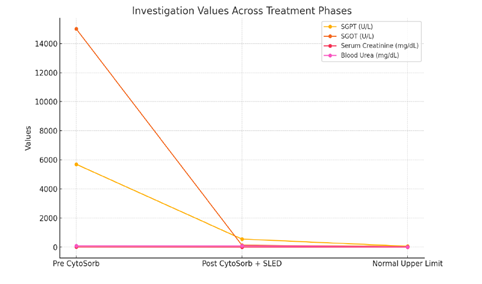
Fig. 1. Results of Kidney and Liver function tests pre and post CytoSorb therapy
(Visual data trends mapped to Table 1 parameters)
Table 1. Results of Kidney and Liver function tests pre and post CytoSorb therapy
| Investigations | Pre CytoSorb | Post CytoSorb and SLED | Normal range |
| SGPT (U/L) | 5695 | 552 | 7-56 U/L |
| SGOT (U/L) | 15000 | 129 | 5-40 U/L |
| S. creatinine (mg/dl) | 4.8 | 2.3 | 0.74-1.35 |
| Blood urea (mg/dl) | 95 | 86 | 7-20 |
3. DISCUSSION
Candida species are among the most prevalent opportunistic fungal pathogens in humans, capable of causing invasive candidiasis and fungal sepsis (Amen et al., 2023).10 Prophylaxis with a broad-spectrum antifungal such as Voriconazole significantly reduces the incidence of invasive fungal infections (IFIs) (Hicheri et al., 2012),11 especially among hematology patients receiving intensive chemotherapy (Abdel Hameed et al., 2022).12 However, its use has been associated with significant adverse effects, including hepatotoxicity, neurotoxicity, and, in rare cases, multi-organ dysfunction due to oxidative stress and mitochondrial toxicity (Deavall et al., 2012).13 In the presented case, the patient developed gastrointestinal and systemic symptoms shortly after initiating voriconazole therapy, suggesting a potential drug-induced toxicity.
Emerging evidence suggests that the immune status of patients plays a crucial role in determining the severity of drug-induced toxicity. Interleukin-10 (IL-10), a key regulator of immune homeostasis, has been shown to correlate with inflammation severity in hematologic malignancies, and may serve as a marker for systemic inflammatory responses during antifungal treatment (Fergany et al., 2025; Mohammed et al., 2021).14-15 Voriconazole itself has been associated with immunomodulatory effects that extend beyond antifungal activity. It has been shown to upregulate vascular endothelial growth factor (VEGF) and platelet-derived growth factor (PDGF), both of which contribute to angiogenesis and osteoblast activity, potentially implicating vascular and skeletal side effects (Allen et al., 2015).16 These findings highlight the complex interplay between voriconazole, immune modulation, and endothelial response, which may partly explain the multi-organ dysfunction observed in our patient.
The management of such complex cases necessitates a multifaceted approach. CRRT serves as a cornerstone in treating acute kidney injury and managing fluid overload in hemodynamically unstable patients. Its continuous nature allows for gentle solute and fluid removal, making it suitable for critically ill patients (Tan et al., 2006).17 In recent years, CytoSorb hemoadsorption therapy has emerged as an adjunctive treatment modality aimed at reducing the burden of circulating cytokines and inflammatory mediators. By integrating CytoSorb into the CRRT circuit, clinicians aim to mitigate the “cytokine storm” often observed in severe systemic inflammatory responses. Clinical experiences have demonstrated the potential benefits of combining CytoSorb with CRRT (Lazarus et al., 2002).17
Previous in vitro studies have shown that CytoSorb hemoperfusion can remove up to 98% of key inflammatory cytokines such as MIP1-α, IL-6, and IFN-γ, along with a wide range of bacterial toxins (Gruda et al., 2018). A follow-up study demonstrated that long-term survival beyond 28 days is achievable with both CytoSorb and CRRT, with CytoSorb showing better outcomes in a weighted analysis. Factors such as age, comorbidities, abdominal sepsis, and lactate levels at therapy initiation, particularly levels above 6.0 mmol/L were closely associated with both short and long-term mortality. This suggests that early patient selection based on these markers could help optimize outcomes with CytoSorb therapy (Brouwer et al., 2021). For instance, Steurer et al. reported successful application of CytoSorb in pediatric patients with multi-organ failure, observing rapid stabilization of hemodynamic parameters and a significant reduction in inflammatory markers (Eiden et al., 2007). These observations align with existing literature, suggesting that CytoSorb may be a valuable adjunct in managing severe systemic inflammation and multi-organ dysfunction.
However, one key limitation of this case is that voriconazole drug levels were not monitored, making it difficult to definitively confirm drug-induced toxicity as the primary cause of the patient’s multi-organ dysfunction. Additionally, due to financial constraints, the patient was discharged against medical advice, which limited our ability to assess his long-term clinical outcomes. As this is a single observational case, we also cannot draw firm conclusions about the specific benefits of CytoSorb therapy without further controlled studies.
4. CONCLUSIONS
This case highlights the complexities of managing drug-induced multi-organ dysfunction and points to the potential role of adjunctive therapies such as CytoSorb hemoadsorption alongside CRRT. The clinical improvements observed suggest that incorporating CytoSorb into the treatment plan may help reduce systemic inflammation and support organ recovery. However, further research is needed to establish standardized treatment protocols and to identify which patient groups are most likely to benefit from this approach.
Author of This Article
- Dr. Raziuddin Ahmed
Internal Medicine & ICU, Square Hospital Limited, Dhaka, Bangladesh.
- Dr. Shihan Mahmud Redwanul Huq
Internal Medicine & ICU, Square Hospital Limited, Dhaka, Bangladesh.
- Dr. Raihan Rabbani
Internal Medicine & ICU, Square Hospital Limited, Dhaka, Bangladesh.
- Dr. AKM Abu Mottaleb
Nephrology, Square Hospital Limited, Dhaka, Bangladesh.
- Dr. Mohammad Mufizul Islam Polash
ICU, Square Hospital Limited, Dhaka, Bangladesh.
- Dr. Shahzadi Sayeeda Tun Nessa
Internal Medicine & ICU, Hi-Care General & Specialized Hospital Limited, Dhaka, Bangladesh.
REFERENCES
- Abdel Hameed, M. R., Elgendy, S. G., El-Mokhtar, M. A., Sayed, D., Mansour, S. M., & Darwish, A. M. (2022, February 27). T-lymphocytes expression of toll-like receptors 2 and 4 in acute myeloid leukemia patients with invasive fungal infections. Mediterr J Hematol Infect Dis, 14(1), e2022022.
- Allen, K. C., Sanchez, C. J., Niece, K. L., Wenke, J. C., & Akers, K. S. (2015, December). Voriconazole enhances the osteogenic activity of human osteoblasts in vitro through a fluoride-independent mechanism. Antimicrob Agents Chemother, 59(12), 7205-7213.
- Amen, A., Hassan, E., Elgendy, S., Bayoumi, S., Abdel Hameed, M., & Abd-Alrahman, E. (2023, December 1). The effect of essential oils of selected plants on clinical isolates of Candida species growth, transition and biofilm formation. Bulletin of Pharmaceutical Sciences Assiut University, 46(2), 1209-1232.
- Brouwer, W. P., Duran, S., & Ince, C. (2021). Improved survival beyond 28 days up to 1 year after CytoSorb treatment for refractory septic shock: A propensity-weighted retrospective survival analysis. Blood Purif, 50(4-5), 539-545.
- Deavall, D. G., Martin, E. A., Horner, J. M., & Roberts, R. (2012). Drug-induced oxidative stress and toxicity. J Toxicol, 2012, 1-13.
- Eiden, C., Peyrière, H., Cociglio, M., Djezzar, S., Hansel, S., Blayac, J. P., et al. (2007, May 1). Adverse effects of voriconazole: Analysis of the French pharmacovigilance database. Annals of Pharmacotherapy, 41(5), 755-763.
- Fergany, A., Hassanein, K. M., Zahran, A. M., Abdel Hameed, M. R., & Kamel, A. M. (2025, January). Clinical significance of interleukin 10, interleukin 33, and interleukin 35 on induction chemotherapy in acute myeloid leukemia patients. The Egyptian Journal of Haematology, 50(1), 125-132.
- Friesecke, S., Stecher, S. S., Gross, S., Felix, S. B., & Nierhaus, A. (2017, September 6). Extracorporeal cytokine elimination as rescue therapy in refractory septic shock: A prospective single-center study. Journal of Artificial Organs, 20(3), 252-259.
- Gruda, M. C., Ruggeberg, K. G., O’Sullivan, P., Guliashvili, T., Scheirer, A. R., Golobish, T. D., et al. (2018, January 25). Broad adsorption of sepsis-related PAMP and DAMP molecules, mycotoxins, and cytokines from whole blood using CytoSorb® sorbent porous polymer beads. PLoS One, 13(1), e0191676.
- Hicheri, Y., Cook, G., & Cordonnier, C. (2012, April). Antifungal prophylaxis in haematology patients: The role of voriconazole. Clinical Microbiology and Infection, 18, 1-15.
- Jeu, L., Piacenti, F. J., Lyakhovetskiy, A. G., & Fung, H. B. (2003, May). Voriconazole. Clin Ther, 25(5), 1321-1381.
- Mohammed, D., Khallaf, S., El-Naggar, M., Abdel-Hameed, M., & Bakry, R. (2021, June 1). Interleukin-10: A potential prognostic marker in patients with newly diagnosed multiple myeloma. Research in Oncology, 17(1), 38-41.
- Murray, K. F., Hadzic, N., Wirth, S., Bassett, M., & Kelly, D. (2008, October). Drug-related hepatotoxicity and acute liver failure. J Pediatr Gastroenterol Nutr, 47(4), 395-405.
- Scott, L. J., & Simpson, D. (2007). Voriconazole. Drugs, 67(2), 269-298.
- Steindl, D., Schroeder, T., Krannich, A., & Nee, J. (2025, March 27). Hemoadsorption in the management of septic shock: A systematic review and meta-analysis. J Clin Med, 14(7), 2285. https://www.mdpi.com/2077-0383/14/7/2285
- Steurer, L., Schlager, G., Sadeghi, K., Golej, J., Wiedemann, D., & Hermon, M. (2021, December 12). Hemadsorption as rescue therapy for patients with multisystem organ failure in pediatric intensive care-Report of two cases reports and review of the literature. Artif Organs, 45(12), 1582-1593.
- Tan, K., Brayshaw, N., Tomaszewski, K., Troke, P., & Wood, N. (2006, February 8). Investigation of the potential relationships between plasma voriconazole concentrations and visual adverse events or liver function test abnormalities. The Journal of Clinical Pharmacology, 46(2), 235-243.